Acting
Acting on Camera vs. Stage: Key Differences
The same fundamentals power both crafts, truth, listening, objectives, but the way you deliver them changes completely depending on whether a lens or a live audience is receiving your performance.
Many actors come to one medium first and then discover that the other demands a significant recalibration. Stage actors arriving on a film set are often told to "do less", their performance, perfectly scaled for an auditorium, reads as overblown through a close-up lens. Screen actors stepping onto a stage for the first time frequently find their voice doesn't carry and their physical presence doesn't fill the space. Neither problem is a flaw; it's a calibration issue. Both are fixable.
Understanding the differences precisely, rather than just knowing they exist, helps you make the technical adjustments without losing the truth of the performance. The core of what makes acting work is identical in both formats. What changes is how that work reaches its audience.
Scale and energy
The most immediately obvious difference between screen and stage is scale. In a theatre, your body is read from up to thirty metres away. Every gesture, posture and physical choice needs to carry that distance. On camera, especially in close-up, your face fills a screen several metres wide. A micro-expression that would be invisible in the back row of a theatre reads with enormous clarity through a lens.
This means that stage actors must learn to internalise on camera: to feel deeply and let the face carry the result, rather than expressing through large gestures. Screen actors working on stage must learn to externalise: to find a physical and vocal language that reaches the whole room without feeling artificial.
Neither version is less true or less skilled. What's required is awareness of your medium and the willingness to recalibrate deliberately, not just instinctively.
The camera reads thought
The camera does one thing that a live audience cannot: it gets close enough to read what you're actually thinking. This is both a gift and a demand. You cannot pretend on camera the way you might be able to get away with from a distance. If you're not genuinely connected to the scene, if your mind is on your next line or on the crew behind the camera, the lens will find you out.
The stage asks you to project your inner life outward. The camera asks you to let your inner life be there, and trusts the technology to find it.
This is why the most technically perfect screen performances can still feel empty, while a rougher, less polished one can be riveting: genuine thought is more compelling than simulated feeling. The implication for training is direct, the inner work described in building a believable character becomes even more critical on camera, because the camera will verify it or expose its absence.
Practically: learn to have a full, active inner life during reaction shots. When the camera is on you while your scene partner is speaking, your face is part of the edit. What you're thinking in those moments, whether your character is troubled, amused, calculating, is as important as your dialogue.
Voice and projection
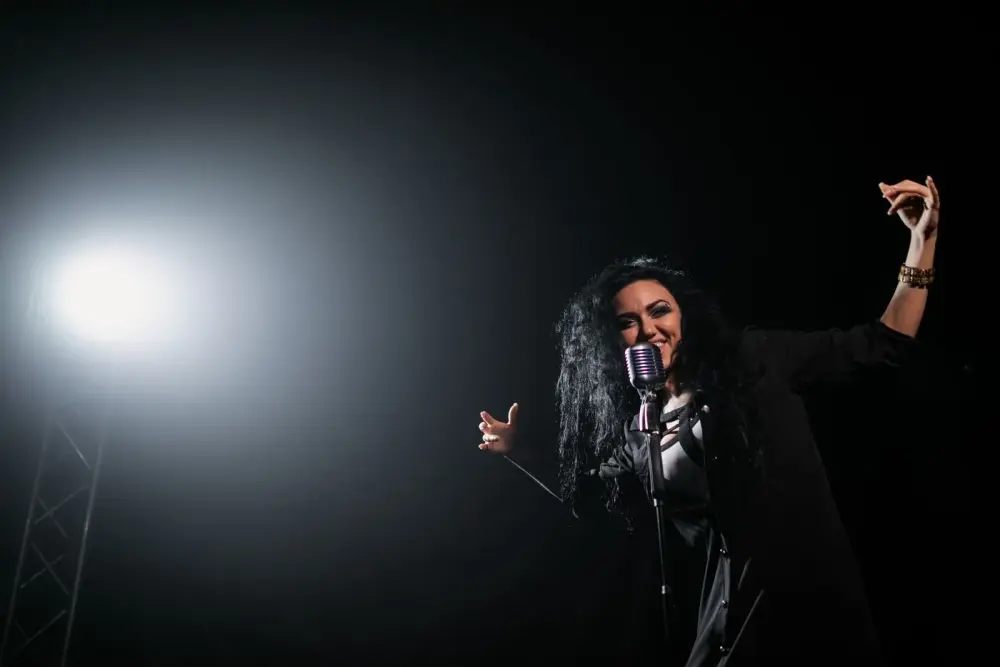
On stage, you are your own amplification system. In most theatres, there is no microphone. Your voice must be produced with enough resonance, breath support and forward placement to reach every seat in the house, and do so while sounding natural, not forced. This is a technical skill developed over years of vocal training and live performance. Stage work builds the instrument; you simply cannot fake vocal power.
On camera, a directional microphone is usually positioned close to you. You don't need to project, you need to be precise. Mumbling, swallowed consonants and inconsistent volume that a theatre audience might miss become very apparent in post-production sound editing. The camera version of vocal skill is articulation and consistency, not power.
- For stage: work on breath support, resonance placement and the ability to sustain projection over a full performance without strain.
- For camera: work on clarity and consistency. Record yourself and listen for dropped consonants, swallowed ends of sentences and uneven pace.
- In both cases: learn to speak with intention. Every word is motivated by what the character wants. That intention carries the voice in both formats.
Continuity and multiple takes
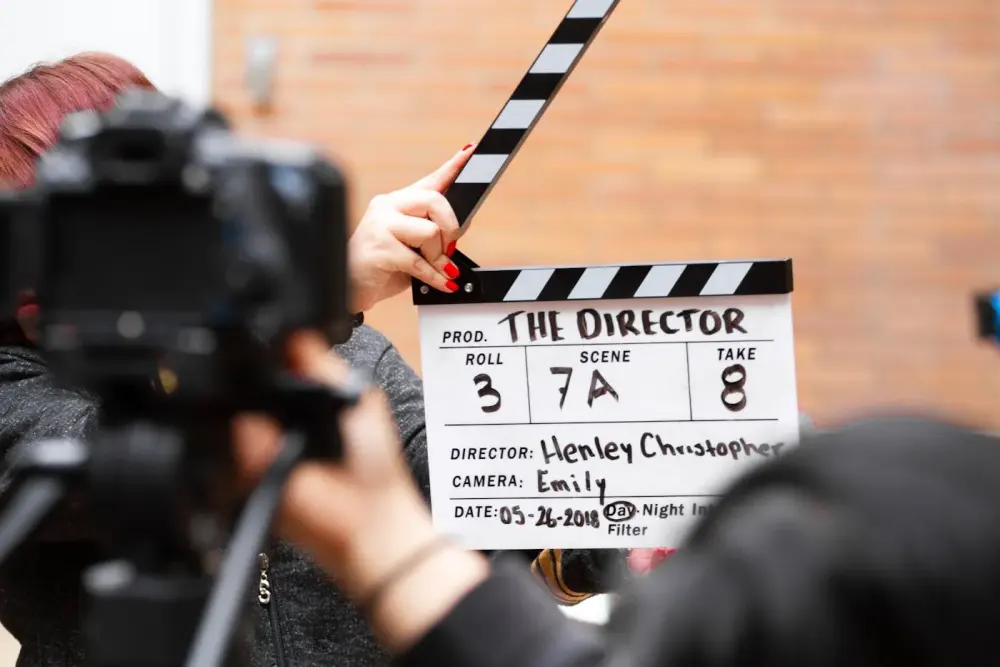
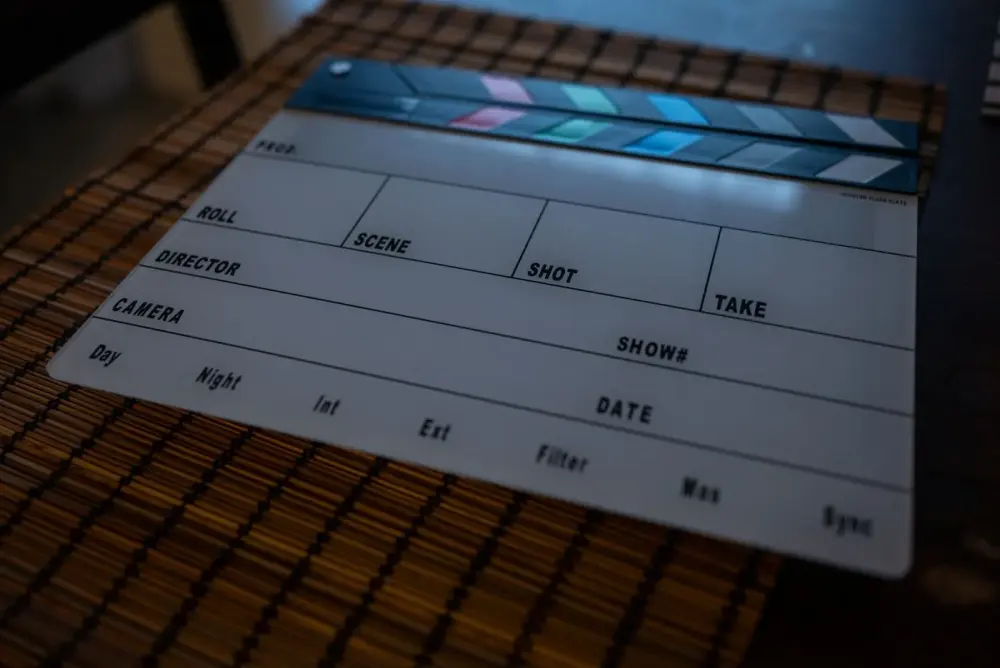
On stage, a performance runs continuously from curtain up to curtain down. The arc is built in real time, moment by moment, and cannot be re-assembled in an editing room. On a film or television set, scenes are shot out of sequence, in multiple takes, from multiple angles. Your performance will be assembled from fragments by an editor, which creates both freedom and responsibility.
The freedom is that you can make different choices on different takes and the best elements may be used. The responsibility is continuity: if you pick up your coffee cup with your right hand on take one and your left hand on take three, the editor can't cut between them. Every physical action, where your hands are, where you look, how you move, needs to be consistent across takes so that the scene can be assembled.
This requires a specific kind of awareness that stage work doesn't demand. Many actors keep a small notebook on set to track their continuity choices. A script supervisor will also be tracking these, but the more aware you are, the less time is lost to re-shoots.
Hitting marks and eyelines
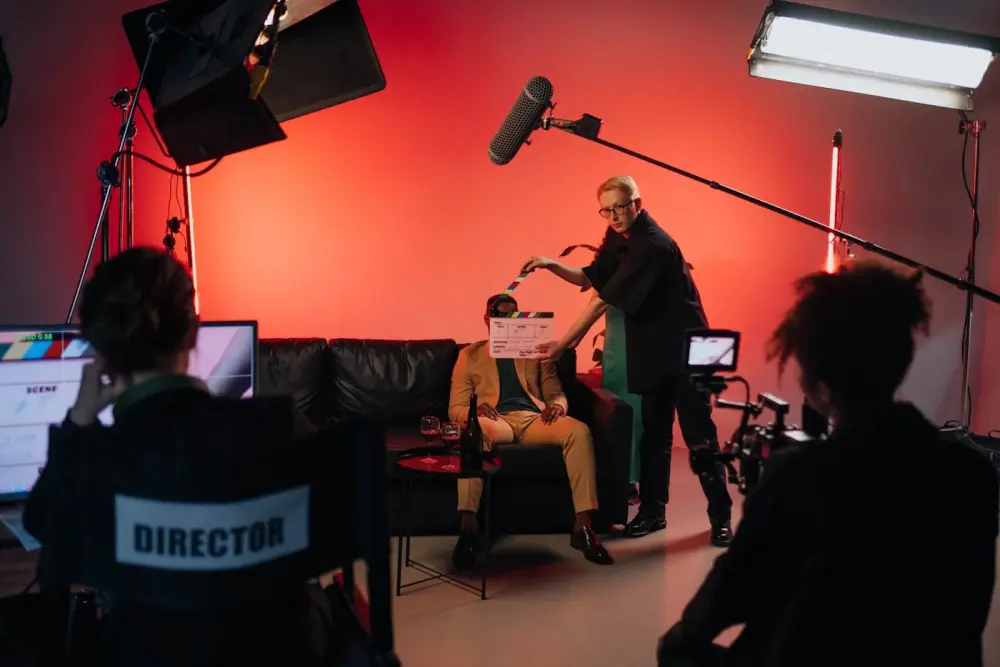
On a film set, your position in the frame is not accidental, it's the result of careful decisions by the director of photography and director. A mark is the specific spot on the floor where you need to stand for the camera to be correctly framed and in focus. Missing your mark means you may be out of focus or out of frame.
Hitting marks while remaining fully present in a performance is a skill in itself. The most common approaches are to rehearse the blocking until it becomes muscle memory (so you don't need to think about it during the take) and to use peripheral vision to orient yourself without breaking eye contact with your scene partner.
Eyelines are equally important. When you're speaking to an off-screen character or reacting to something that isn't there (a digital element added in post-production), the director will give you a specific point to look at. Looking even a few degrees off will be visible to the audience. Accept the eyeline precisely, commit to it, and treat the empty point as if the character or object is genuinely there.
Stage, the whole body and a live audience
Stage acting demands total physical commitment. The audience can see your full body from the front, and in many contemporary theatre configurations, from multiple angles simultaneously. Slouching when your character should be powerful, or tensing when they should be relaxed, registers immediately. Stage work trains the actor to use the whole body as an expressive instrument in a way that camera work alone does not.
The other irreplaceable quality of live performance is the audience. A live crowd is not passive, it responds, it breathes, it laughs, it goes quiet. Learning to receive that energy and let it feed your performance (rather than distract or destabilise you) is something that can only be learned by doing it. Theatre also builds stamina: sustaining a character for two hours, eight times a week, with no possibility of a retake, develops reserves of concentration and commitment that show up in every other acting context.
Training for both worlds
The most versatile, employable actors work across both media comfortably. The good news is that training for one benefits the other, not despite the differences, but because of them.
Stage work teaches voice, physical presence, stamina, and the ability to build a performance arc over a sustained period. Camera work teaches economy, precision, the inner life, and the technical collaboration of a professional set. An actor with serious experience in both is genuinely more equipped than one who has stayed in only one lane.
- For screen-focused actors: Take a theatre class or join a community production. Perform live regularly. Let the experience of a live audience recalibrate your sense of scale and presence.
- For stage-focused actors: Set up a camera and record yourself regularly. Watch the recordings analytically. Work with a screen acting coach who can help you translate your stage skills into the camera's vocabulary.
- For everyone: Master the fundamentals that underpin both. The core skills, listening, objectives, truth and specificity, are identical in both forms. A strong foundation in those, outlined in the acting fundamentals guide, makes the technical adjustments between media far more manageable.
Both media require the same thing of you ultimately: genuine presence in the moment, grounded in clear choices and honest connection to the material. Whether a lens or a live audience is receiving that presence, it will recognise authenticity. That is the skill worth chasing in both worlds.