
Styling
Color Theory for Better Styling Choices
Colour is the fastest communicator in any outfit, before anyone reads your silhouette or notices your accessories, colour has already made an impression. Understanding a few fundamentals changes the way you shop, dress and photograph.
Colour theory can sound intimidating, like something taught in art school with paint mixing and complex diagrams. But the practical application for styling is far simpler. A working understanding of a few key ideas, the relationships between colours, how your natural colouring interacts with what you wear, and how colours behave under a camera lens, is enough to make consistently better choices.
You don't need to memorise every combination or follow rigid colour rules. The goal is to build an intuition that serves you in the morning when you're getting dressed, in a shop when you're deciding what to try, and on a shoot when every choice is amplified.
The colour wheel, simplified
The colour wheel organises colours by their relationship to each other. For styling purposes, three relationships matter:
- Complementary colours sit opposite each other on the wheel, navy and mustard, burgundy and olive, cobalt and terracotta. Paired together they create strong visual contrast and energy.
- Analogous colours sit adjacent, navy, cobalt and teal, for example, or rust, terracotta and burnt orange. These feel harmonious and cohesive because they share tonal family.
- Neutral relationships, black, white, grey, beige and navy function as anchors that work with almost anything. They're the backbone of most versatile wardrobes.
In practice, the most reliable outfit formula is: one or two neutrals plus one colour. This creates interest without chaos. Once this feels comfortable, complementary or analogous pairings can add more sophistication.
Warm vs cool undertones
Every person's skin has an undertone, a subtle cast beneath the surface, that's either warm (golden, olive, peachy), cool (pink, red, bluish) or neutral (a mix of both). This undertone doesn't change with sun exposure or season; it's consistent.
Identifying your undertone is straightforward. Look at the veins on your inner wrist in natural light: greenish-blue veins suggest warm undertones; purple or blue suggest cool; if you can't distinguish, you're likely neutral. Alternatively, hold a piece of gold fabric and then silver fabric near your face, whichever makes your skin look more alive indicates your undertone direction.
This matters for styling because clothes have undertones too. Warm-toned people tend to look most vibrant in warm-cast colours, earthy oranges, warm reds, olive greens, camel, gold. Cool-toned people often find cool colours, clear navy, cobalt, fuchsia, burgundy, silver-grey, more flattering. Neutral undertones have the most flexibility.
These are tendencies, not rules. Wear what you love. But if you've ever put on a colour and looked washed out without understanding why, undertones are usually the explanation.
Find your best neutrals
Not all neutrals are equally flattering on everyone. The classic "true white" can look stark or cold on people with warm undertones; an off-white or ivory is often more harmonious. Similarly, a blue-toned black (common in cool-cast fabrics) suits cool undertones well, while a softer, warmer charcoal or espresso may work better for warm-toned complexions.
- Warm neutrals, camel, cream, tan, warm grey, off-white, suit warm and neutral undertones.
- Cool neutrals, true white, steel grey, cool navy, stark black, suit cool and neutral undertones.
Finding your most wearable neutrals is worth the experiment. Hold fabric swatches close to your face in daylight and observe which ones make your eyes look clearer, your skin more even and your face more energised. Those are your core neutrals, the base of your versatile wardrobe.
Building outfits with contrast
Contrast, the difference in lightness or darkness between pieces, is one of the most powerful tools in outfit building. High contrast (black top, white trousers; navy jacket, cream shirt) creates clear definition and a strong visual statement. Low contrast (tone-on-tone, similar shades throughout) creates a more fluid, elongated and understated effect.
Your own natural contrast, the difference between your skin tone, hair and eye colour, gives a useful starting point. People with high natural contrast (dark hair, light skin or vice versa) tend to carry high-contrast outfits well. Those with softer natural contrast often look more balanced in lower-contrast dressing.
You can also use contrast deliberately to direct attention. A bold colour on top draws the eye upward; a statement piece below anchors the lower half. For the relationship between contrast and proportional balance, see Dressing for Your Body Type with Confidence.
Monochrome and tonal dressing
Wearing one colour head-to-toe, or a family of closely related tones, is one of the most effective styling techniques available. It creates an elongating effect, reads as highly intentional, and photographs exceptionally well.
A single colour, worn with confidence from head to toe, is always more powerful than a complicated combination.
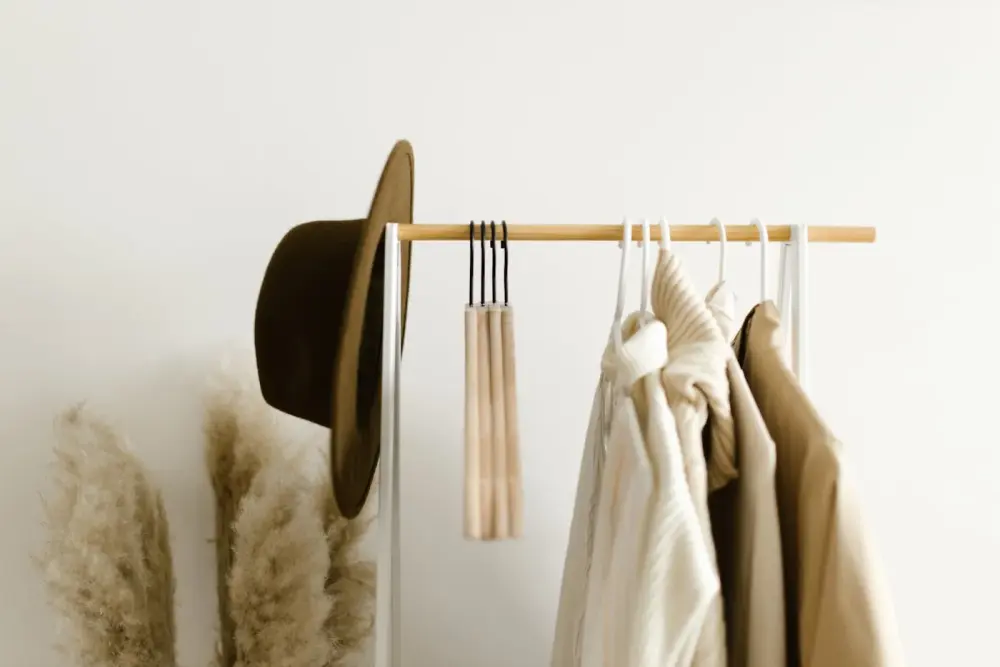
Tonal dressing doesn't require exact matching. Different textures and slightly varied shades within the same colour family create visual depth and interest. A cream linen shirt over caramel trousers with tan leather accessories is a tonal look, varied, cohesive, and genuinely sophisticated.
Monochrome and tonal dressing also travel well. When you're uncertain what the lighting or setting will look like at a shoot or event, a tonal outfit is a reliable, versatile choice that rarely reads poorly.
Colours that work on camera
Camera lenses and studio lighting process colour differently from the human eye. Some colours that look great in person create problems on camera; others that seem plain to the eye read beautifully through a lens.
- Avoid pure white near the face on camera, it overexposes easily and throws the colour balance of the whole image. Off-white or cream is safer.
- Avoid very busy patterns, fine stripes and intricate checks can create a moiré effect (a visual vibration) that distracts from your face.
- Mid-tones photograph cleanly, dusty blues, sage greens, warm taupes, muted terracottas, soft burgundies. These hold detail across a wide range of lighting conditions.
- Jewel tones, cobalt, emerald, sapphire, deep plum, work especially well in photography and tend to flatter a wide range of complexions.
- Highly saturated neons can bleed colour and distort surrounding areas under studio lights; use them sparingly on camera.
When in doubt for a shoot, a medium-value solid colour, one that isn't the lightest or darkest value in the frame, is the safest choice. It keeps the focus where it belongs: on your face and expression.
Quick everyday rules
You don't need to run through all of colour theory every morning. These shortcuts work for the vast majority of everyday outfit decisions:
- One neutral plus one colour is almost always the right combination to start from.
- If you're wearing two colours, make sure they share an undertone (both warm or both cool) unless you want deliberate contrast.
- Repeat a colour somewhere, a belt that picks up a shade in your top, footwear that echoes your bag. This creates cohesion without effort.
- When an outfit looks "off" and you can't identify why, try removing the most colourful piece and replacing it with a neutral. The problem usually becomes clear.
- Trust your immediate reaction, if a colour makes you feel more alive and energised when you put it on, that's useful information.
Colour knowledge compounds with practice. The more deliberate you are about colour choices over time, the more instinctive it becomes. Pair that instinct with an understanding of your personal style fundamentals and you have a genuinely powerful tool for getting dressed with confidence every day.