Hair
Hair Care Fundamentals for Models
Your hair is handled, heated and styled on almost every shoot you take. Build the right foundation now and it will hold up under that pressure, and look genuinely healthy, not just styled, in front of the camera.
Modelling puts hair through more stress than most daily lives do. Heat tools, products, pins, pulling and colouring accumulate shoot after shoot, and hair that starts strong can become brittle and unmanageable faster than you'd expect. But the fix isn't complicated: a handful of consistent habits between jobs makes the difference between hair that photographs with genuine shine and body, and hair that looks dull even under the best lighting. This guide covers the core principles, starting with understanding your own hair before anything else.
Know your hair type and texture
Products and techniques that work brilliantly on one person can be actively harmful to another. Before building any routine, understand what you're working with:
- Straight (Type 1), lies flat, tends to get oily quickly at the roots, and shows product build-up easily.
- Wavy (Type 2), an S-shaped pattern prone to frizz; benefits from lightweight moisturising products.
- Curly (Type 3), defined curls that need plenty of moisture and gentle handling to avoid breakage.
- Coily / Kinky (Type 4), tight coils or zig-zag patterns with the most need for moisture and the most vulnerability to damage from heat and mechanical stress.
Beyond curl pattern, notice your porosity (how well your hair absorbs and holds moisture) and your density (how much hair you actually have). High-porosity hair soaks up products fast but loses moisture quickly; low-porosity hair repels products until they're applied with a little warmth. These two factors shape which conditioners, oils and styling products will actually work for you.
Washing the right way
Frequency is the first question: washing too often strips natural oils and can make scalps either dry and flaky or compensate by producing more oil. Washing too rarely leads to product build-up that weighs hair down and can irritate the scalp.
A reasonable starting point: two to three times a week for most hair types, with oilier scalps washing more often and coily textures washing less. Adjust based on how your hair actually feels rather than following a rigid schedule.
Technique matters
Focus shampoo on the scalp, not the lengths, roots collect oil and product; ends don't. Use your fingertips (not nails) in gentle circular movements to lift dirt without roughing up the cuticle. Rinse with lukewarm water rather than hot; high temperatures open the cuticle and accelerate moisture loss. A brief final rinse with cooler water helps seal the cuticle and adds shine.
If your hair feels stripped after shampooing, try a co-wash (conditioner-only wash) on alternate washes, particularly effective for curly and coily types.
Conditioning, masks and oils
Conditioner isn't optional. Even fine hair benefits from a lightweight conditioner applied from mid-lengths to ends after every wash. It temporarily smooths the cuticle, reduces tangles, and provides a barrier against friction when styling.
Deep conditioning
Once a week, swap your standard conditioner for a deep conditioning mask or treatment. Apply to damp hair, wrap in a warm towel for ten to twenty minutes, then rinse. The heat encourages penetration, and the result is noticeably softer, more manageable hair. If your hair is colour-treated or regularly heat-styled, consider a protein treatment once a month to restore structural strength, but don't overdo it; too much protein makes hair stiff and prone to breakage.
Oils
A small amount of a lightweight oil, argan, jojoba, or a blend, applied to damp ends before drying adds shine and reduces frizz without heaviness. Always patch-test new products on a small section of hair first, particularly if your hair is colour-treated, as some oils can interact with certain dye formulations. Avoid applying oils directly to the scalp unless you're doing a pre-wash treatment; for most hair types it leads to greasiness that's hard to shift.
Heat and colour damage
Heat and chemical services are the two biggest sources of cumulative hair damage for working models. Neither has to be off-limits, but both need managing.
Heat tools
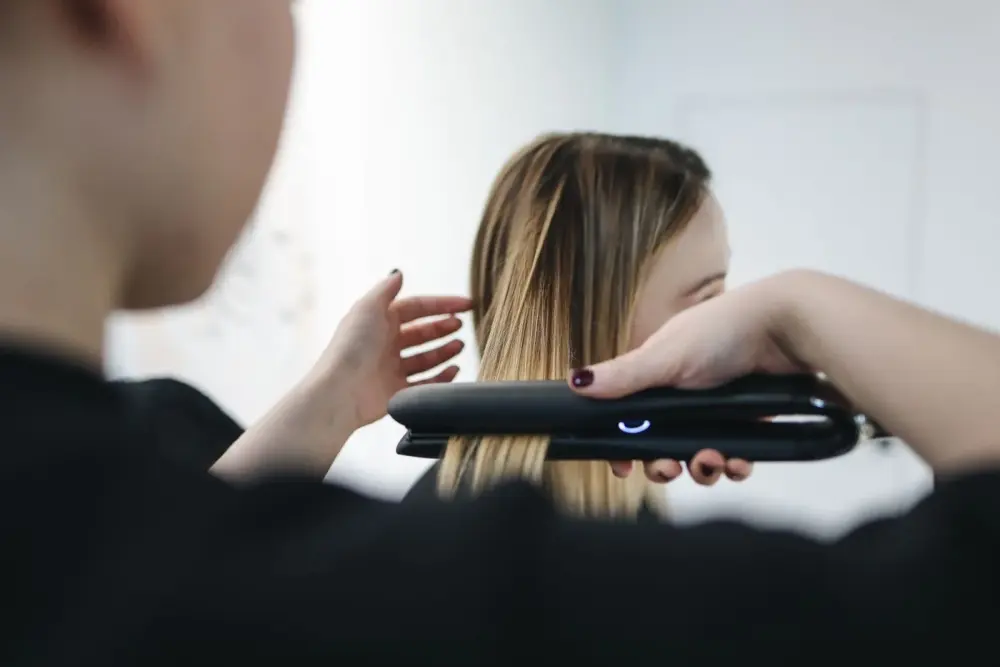
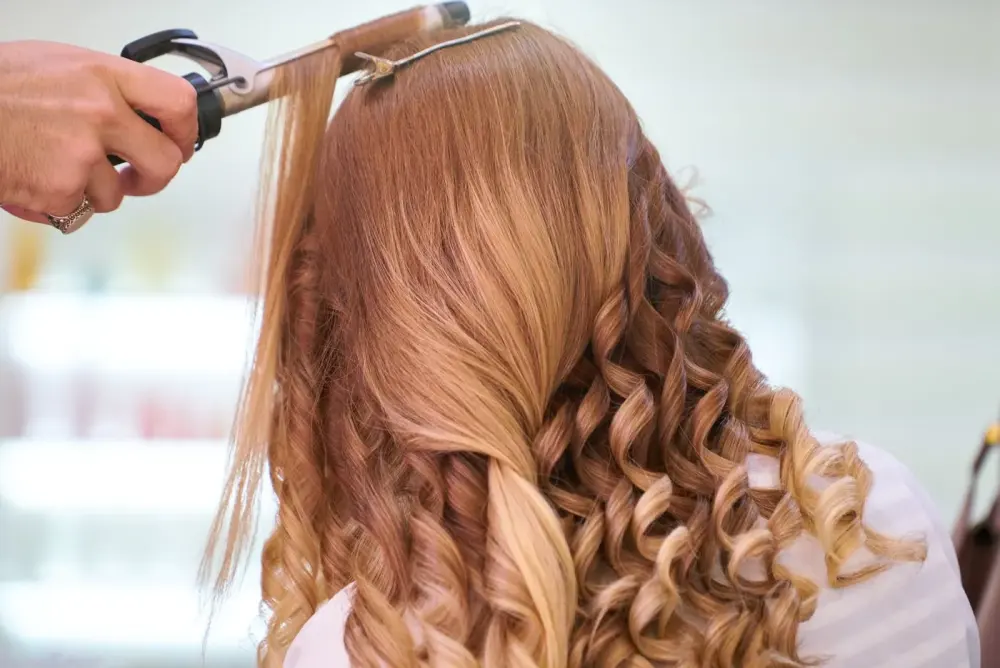
Never apply heat without a heat protectant, applied to damp or dry hair before any tool touches it. Choose the lowest effective temperature: fine or damaged hair rarely needs more than 160-170 °C; thicker or coarser hair can handle up to 200 °C, but going higher accelerates damage even on robust hair types. Move tools steadily through the hair, holding a flat iron in one spot even briefly causes hot-spot burns to the cuticle that cannot be repaired, only cut off.
Colour and chemical services
Bleaching, relaxing and perming all break down the hair's internal structure. Space chemical services at least eight to ten weeks apart to allow recovery, and always follow with a bonding treatment or intensive mask. Be honest with your colourist about how frequently you heat-style, they can adjust the formulation accordingly. If you're approaching a shoot, avoid new colour in the week before the booking; a fresh colour can behave unpredictably until it settles.
A heat protectant is not optional kit, it is the one product that stands between a good shoot and irreversible breakage.
Regular trims and maintenance
Split ends travel up the hair shaft if left alone, turning minor damage into major breakage. Getting a trim every eight to twelve weeks, or sooner if you're frequently styling, removes the damaged tip before it compromises the length above it. If you're growing your hair, the idea of cutting feels counterintuitive, but a small trim every two to three months will actually produce more length over a year than letting splits run unchecked.
Between cuts, use a wide-tooth comb on wet hair and a gentle daily detangling routine to minimise mechanical breakage, which is often more significant than heat damage for people who skip regular brushing and then tackle knots aggressively.
Diet, water and hair health
Hair is made primarily of keratin, a protein, and its growth cycle depends on a steady supply of nutrients. Visible improvements from dietary changes take several months to show, hair only grows about a centimetre per month, but the investment is worth it:
- Protein, eggs, lentils, fish and lean meat supply the amino acids keratin is built from.
- Iron, deficiency is a common and often overlooked cause of thinning and shedding. Include leafy greens, legumes and, if you eat it, red meat.
- Biotin and B vitamins, found in eggs, nuts, seeds and wholegrains; support the follicle cycle.
- Omega-3 fatty acids, oily fish, flaxseed and walnuts help maintain a healthy scalp and add natural shine.
- Hydration, a dehydrated body produces drier, more brittle hair. Aim for at least two litres of water daily.
If your hair has changed noticeably in texture, density or growth rate, see a doctor before investing in topical treatments; the cause is often systemic and can be addressed directly. For more on nutrition and long-term hair strength, see the companion piece on everyday habits for healthy, camera-ready hair.
Protecting your hair on set
Even when a professional hairstylist is responsible for your look, you can advocate for your hair between setups. Bring your own heat protectant spray and offer it, most stylists will respect that. If a style requires tight braiding or heavy pinning, ask for padding at the tension points where possible. At the end of a long shoot, ask the stylist to remove pins and clips slowly and individually rather than pulling them out in bulk.
Travelling between locations? Tie hair loosely in a low braid or bun with a fabric scrunchie, never an elastic band, to prevent friction and matting. When you get home, follow a gentle cleanse and deep condition to reset before the next job. Understanding how to read a brief and prepare your hair for different shoot types will also help you arrive better prepared; see our guide on styling your hair for different shoots for practical pre-shoot planning.