Hair
Everyday Habits for Healthy, Camera-Ready Hair
Products and treatments only work when the habits around them are right. These are the small, repeatable things you do every day, and stop doing, that determine whether your hair looks genuinely healthy or just styled.
Good hair on camera isn't the result of what you do the morning of a shoot, it's the result of what you do every other day in between. Products, deep treatments and salon appointments all matter, but they work on top of a foundation of daily habits. If those habits are careless, no treatment will save you. If they're consistent and thoughtful, your hair will stay in the kind of condition where even a minimal amount of prep looks polished on set. This guide is about that foundation: the non-glamorous, do-it-every-day stuff that actually moves the needle.
Wash less, protect more
The most common hair mistake among people new to modelling is washing every day. Daily shampooing strips the scalp's natural sebum, the oil your hair actually needs to stay soft and protected, and triggers the scalp to overproduce oil as compensation. The result is greasier roots, drier ends, and hair that's harder to manage, not easier.
Most hair types do well with two to three washes a week. If your scalp feels oily between washes, a light application of dry shampoo at the roots on day two is a better solution than reaching for the shampoo bottle. Apply dry shampoo the night before it's needed rather than the morning of, it has time to absorb properly overnight, leaving roots with genuine lift rather than a chalky finish.
On non-wash days, protect your hair from environmental stressors: sun exposure degrades the cuticle and fades colour just as it damages skin, so a light UV-protective leave-in spray when you're spending time outside is worth building into your routine. Always patch-test new leave-in products on a small section before applying them to your whole head, particularly if your hair is colour-treated.
Gentle drying and detangling
Wet hair is at its most fragile. The cuticle swells and lifts when saturated, which makes it dramatically more prone to breakage under friction or tension. Two common habits cause more damage than most people realise:
- Rubbing hair with a towel, the rough, back-and-forth motion roughens the cuticle, creates frizz and, over time, causes significant breakage. Instead, press and squeeze sections of hair between the towel and hold briefly; don't rub.
- Brushing wet hair with a bristle brush, the hair stretches before the brush reaches the tangle, then snaps. Use a wide-tooth comb or a specifically designed wet detangling brush, working from the ends upwards, not from the roots down.
A microfibre towel or a cotton T-shirt is gentler than a standard bath towel for the initial moisture absorption. Wrap it loosely rather than in a tight turban, which stresses the hairline. If you have wavy or curly hair, this technique also helps define your natural pattern rather than disrupting it.
Always use heat protection
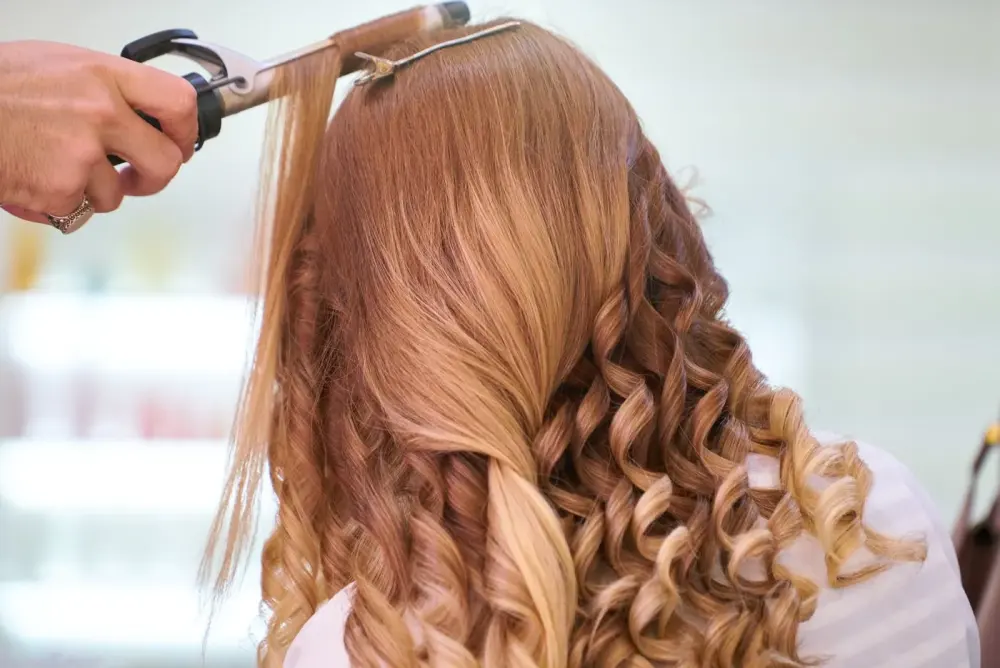
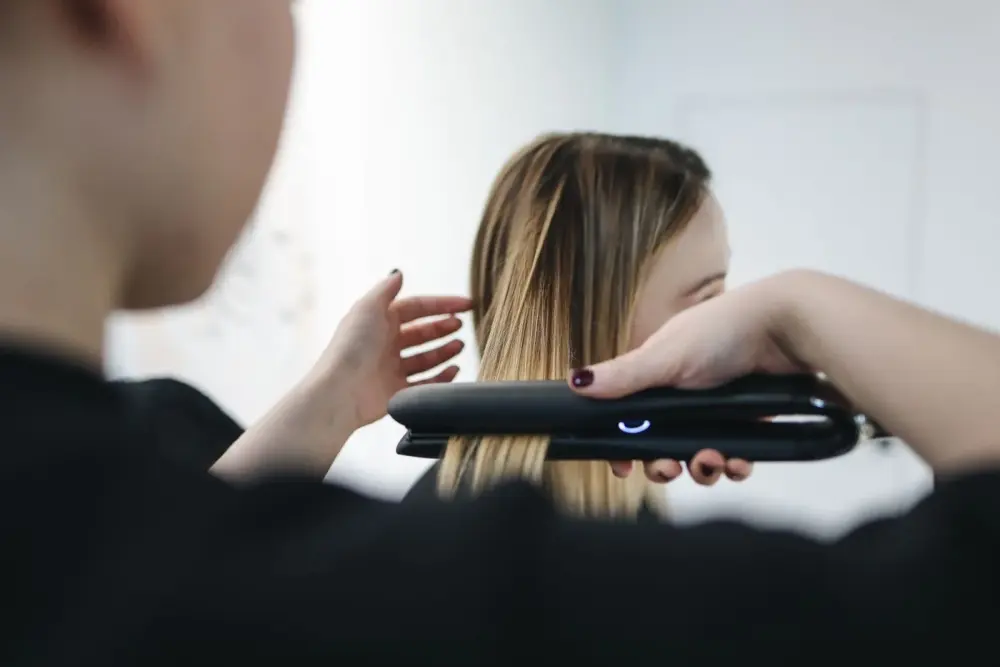
This deserves its own section because skipping it is one of those habits that compounds invisibly until the damage becomes severe. Heat protectants work by forming a temporary barrier on the hair shaft that distributes heat more evenly and reduces direct damage to the cuticle and cortex. They don't prevent all damage at high temperatures, but they significantly reduce it at the temperatures most tools operate at.
Apply protectant before any heat tool, including a hair dryer, many people use it before straighteners but skip it when blow-drying, which is a contradiction, since a blow-dryer used daily causes cumulative damage equivalent to occasional flat iron use. Spray evenly through damp or dry hair and distribute with your hands before styling.
For a comprehensive overview of heat tool use, safe temperatures and damage prevention during styling, see the hair care fundamentals guide. The key principle: use the lowest temperature that achieves the result, not the highest your tool can reach.
Consistency beats intensity, ten minutes of gentle, protected styling every day will leave your hair in better condition than one heavy treatment a week does nothing to prevent six days of carelessness.
Silk pillowcases and sleep
You spend roughly a third of your life with your hair pressed against a surface. Standard cotton pillowcases have a relatively rough texture that creates friction every time you move during sleep, and you move dozens of times a night. That friction roughens the cuticle, causes tangles and, over months, contributes to breakage, particularly at the hairline and the nape of the neck.
A silk or satin pillowcase reduces that friction substantially. The benefits compound over time: less frizz, fewer tangles in the morning, better retention of moisture in the hair shaft, and reduced pressure on the hairline. It's one of the highest-return, lowest-effort changes you can make.
If you have longer hair, loosely braiding it or gathering it in a low bun with a soft fabric scrunchie before bed reduces tangling and prevents the length from catching under your body weight during the night. Avoid tight overnight styles, which stress the follicle repeatedly and can lead to traction-related shedding over time.
Look after your scalp
The scalp is where hair growth begins, and most people ignore it until something goes wrong. A healthy scalp, well circulated, clean but not stripped, and balanced in terms of oil production, produces stronger hair with better growth cycles.
- Massage, spend two to three minutes massaging your scalp during shampooing and as a separate dry habit a few times a week. It stimulates blood flow to the follicles, which supports the growth phase.
- Avoid product build-up at the scalp, heavy conditioners, oils and stylers applied to the roots block follicles and create an environment for bacterial overgrowth. Apply conditioning and styling products from mid-lengths to ends only.
- Manage dandruff early, occasional flaking is normal, particularly in dry weather or after product changes. A zinc pyrithione or ketoconazole shampoo used once a week usually resolves mild dandruff. Persistent or severe dandruff, a very oily or very itchy scalp, or noticeable hair thinning are worth discussing with a dermatologist; don't let them go unaddressed.
Eat for stronger hair
Hair is living tissue grown from follicles that need a continuous supply of nutrients. Visible changes from dietary adjustments take several months, hair only grows roughly one centimetre per month, but they are real and measurable. The most important nutrients for hair health:
- Protein, hair is made of keratin, which requires adequate dietary protein. Include eggs, legumes, fish, dairy or lean meat in your daily meals.
- Iron, low iron is a leading cause of hair shedding and thinning, particularly in women. Leafy greens, lentils, seeds and lean red meat are good sources; pair plant-based iron with vitamin C for better absorption.
- Zinc, supports the repair cycle of follicles. Found in pumpkin seeds, chickpeas, nuts and shellfish.
- Biotin (B7), eggs, almonds, sweet potato and wholegrains. Biotin supplements are widely marketed for hair growth, but evidence is mostly relevant to those with a genuine deficiency; food sources are preferable.
- Hydration, a dehydrated scalp produces drier, more brittle hair. Two litres of water a day is a reasonable baseline; increase this if you're in a hot climate or physically active.
If you have noticed significant changes in your hair's density, texture or growth rate, see a doctor before adding supplements, the underlying cause is often hormonal or deficiency-based and can be addressed directly.
Habits worth dropping
The positive habits above make the biggest difference, but removing a few common negative ones matters just as much. Here are the ones most worth reconsidering:
- Tight, everyday ponytails and topknots, constant tension at the same point on the hair shaft and at the follicle leads to traction alopecia over time. Vary your parting and the height and position of your ties; use only fabric scrunchies, never bare elastics.
- Skipping conditioner on wash days, some people with fine hair skip conditioner to avoid limp results. A lightweight, rinse-out formula used from mid-lengths only won't weigh down the roots and will dramatically reduce tangles and breakage.
- Aggressive towel drying, as covered above; press and squeeze, never rub.
- Layering many products without clarifying, product build-up accumulates faster than most people expect, leaving hair looking dull and feeling heavy. A clarifying shampoo used once every two to four weeks dissolves silicone and product residue that regular shampoos don't fully shift.
- Brushing from root to tip, always work from the ends upward to avoid dragging tangles through the full length of the hair and snapping it.
The sum of these habits is what your hair looks like on any given shoot day, and on casting days, which matter just as much. For guidance on translating healthy hair into appropriate styling for specific types of work, see our guide on styling your hair for different shoots. And if you're building your overall approach to presentation for a modelling career, the advice in how to start modelling covers the full picture beyond hair alone.