Makeup
Building Your First Professional Makeup Kit
A well-built kit isn't about having the most products, it's about having the right ones, knowing how to use them, and being able to trust them under pressure. Build thoughtfully from the start and you'll spend less money overall.
The first professional makeup kit you build will be with you for years. The choices you make now, quality of brushes, range of shades, hygiene habits, set the standard for everything that follows. The temptation when starting out is to buy everything at once; the smarter approach is to buy fewer, better things and add deliberately as your skills develop and your working context becomes clearer.
If you're still building your core technique, read the guide on makeup basics for beginners first, understanding how each product category is used will make every buying decision in this article more meaningful.
Brushes and tools first
Invest in tools before products. Good brushes outlast dozens of product purchases and are the single most effective upgrade a beginner can make. Poor-quality brushes make blending genuinely difficult; good brushes make it feel effortless.
The core brush set
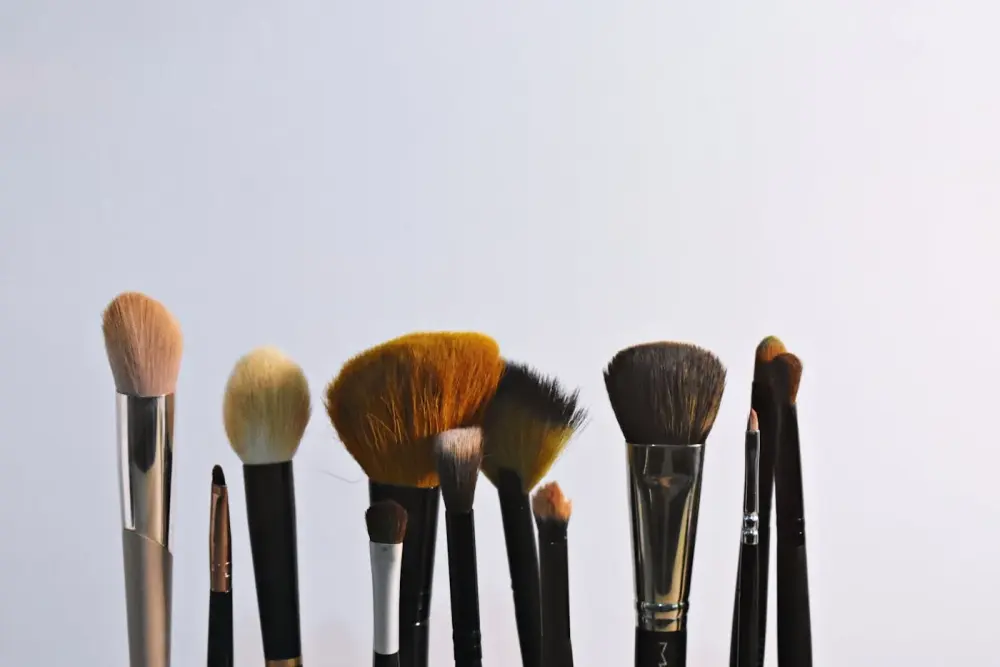
You don't need a forty-piece set. These seven brushes cover almost everything:
- Flat foundation brush, for applying and initial blending of liquid foundation.
- Large fluffy powder brush, for loose powder and blush. The most-used brush in any kit.
- Tapered contour or bronzer brush, shaped to sit naturally in the hollows of the face.
- Medium blush brush, smaller and more precise than the powder brush for targeted cheek colour.
- Fluffy eye blending brush, the most important eye brush. Used to blend and soften shadow.
- Flat shader brush, for packing shadow onto the lid with precision.
- Small concealer or detail brush, for blemish spot-work and tight liner application.
Other tools
A set of beauty sponges (keep at least two so one is always clean and dry), a set of clean spoolies for brows and lashes, and cotton buds for corrections. A pair of good-quality eyelash curlers completes the essential toolkit.
Base products and a range of shades
For a personal kit, you need base products that work for your own skin. For a professional kit intended for working on others, you need a considered range of shades that covers a realistic spread of skin tones.
Foundation
A medium-coverage, satin-finish liquid foundation is the most versatile starting formula. It can be sheered out with a sponge for a lighter result or built with a brush for more coverage. If you're building a personal kit, buy your match. If you're building a professional kit, invest in a five-shade range that covers fair, light-medium, medium, medium-deep and deep, and learn to mix adjacent shades to hit every tone between them.
Concealer
A creamy, medium-coverage concealer in two finishes: a brightening peach-toned concealer for under the eyes, and a full-coverage skin-toned concealer for blemishes. Keep both within two shades of your most-used foundations.
Primer
One hydrating primer and one mattifying or pore-blurring primer covers most skin types and contexts. Apply before foundation; use sparingly.
For shoots specifically, review the guidance in the HD makeup guide on which base formulas perform best under studio lighting, this will inform whether you prioritise certain finishes in your kit.
Eyes and brows
Eye shadow
Start with a neutral matte palette of eight to twelve shades spanning pale cream through to deep brown and black. These shades are universally wearable, work on any skin tone, and serve as the foundation for almost every eye look. A small shimmer palette of champagne, gold and bronze rounds this out for occasions requiring more drama.
Eyeliner
Three formats give you versatility across looks and skill levels: a soft kohl pencil for smudged or diffused liner, a fine-tip liquid liner for precise lines, and a gel pot liner with a thin angled brush for everything between the two.
Mascara
Keep two mascaras in a professional kit: a lengthening formula and a volumising formula. In a personal kit, one reliable all-rounder is sufficient. Replace both every three months, regardless of how much product remains.
Brows
A brow pencil in two shades, one warm brown and one cool taupe, covers most natural hair colours. A clear brow gel and a tinted brow gel in a matching shade complete your brow toolkit and handle the majority of brow grooming requirements.
Cheeks and lips
Blush
A powder blush in three shades, a warm peach-coral, a neutral rosy pink, and a deep berry or wine, is sufficient for a broad range of skin tones and lighting conditions. In a personal kit, one shade is enough to begin.
Bronzer
A matte or satin bronzer in one shade that sits two shades deeper than your foundation. Avoid bronzers with heavy shimmer, they read as glitter rather than warmth in daylight and on camera.
Highlighter
One powder highlighter in a champagne or gold tone is versatile across most skin tones. A cream highlighter in a similar shade gives a more skin-like finish and is preferable for natural or HD looks.
Lips
A lip kit that covers the essentials: five lip liners (nude, pink, berry, red, brown), four lipsticks (a nude, a warm pink, a berry, and a classic red), one clear gloss and one tinted gloss. This small selection handles the full range of most bookings. Never share lip products, and always use disposable wands or sanitise applicators between uses on different clients.
Setting and finishing
- Loose translucent powder, the workhorse of kit finishing. Buy a finely milled version to avoid flashback under photography lighting.
- Pressed powder, for touch-ups on set without the mess of loose powder.
- Setting spray in two finishes, a dewy finish for natural and skin looks; a matte-finish for long-wear and humid conditions.
- Makeup remover wipes and micellar water, for corrections, mistakes and post-shoot cleanup.
- Blotting papers, faster and less disruptive than powder for oil control between shots.
Hygiene and kit care
A professional kit is only as good as its hygiene. Contaminated products and dirty tools are a liability, to your clients' skin and to your professional reputation.
A clean kit is a professional kit. There is no shortcut, and there is no acceptable reason to skip this.
- Clean brushes after every client using a quick-dry brush sanitiser spray. Do a full wash with brush shampoo at the end of every working day.
- Sanitise palettes by misting the surface with isopropyl alcohol (70%) and allowing to air dry.
- Use disposable applicators for mascara, lip products and any products applied directly to clients. Never double-dip a used applicator into a shared product.
- Replace sponges regularly, a beauty sponge should be replaced every two to four weeks in professional use.
- Check expiry dates: mascara every three months, liquid products every six to twelve months, powder products every twelve to twenty-four months.
- Never share mascaras or eye pencils between clients, these are direct eye-contact products with genuine infection risk.
- Patch-test on new clients, ask about allergies and known sensitivities before beginning any application.
Store your kit in a clean, hard-sided case with compartments. A disorganised kit slows you down on set and signals carelessness to clients. Restock and reorganise after every working period.
Budget vs pro picks
Not every item in your kit needs to be professional-grade, and knowing where the quality difference actually matters will save you money.
Invest in:
- Brushes, synthetic brushes from brands like Sigma, Real Techniques or Zoeva at mid-range pricing are excellent. Cheap brushes shed bristles, don't blend well, and fall apart quickly.
- Foundation and concealer, shade range, formula stability and skin compatibility matter here more than anywhere else.
- Setting spray, formulation quality is harder to fake at the budget end.
Budget options perform well for:
- Eye shadow palettes, drugstore neutral palettes are often comparable to premium ones for blendability and pigmentation.
- Cotton buds, sponges and disposable wands, these are consumables. There's no quality gain from spending more.
- Pencil liners and brow pencils, most pencil-format products perform similarly across price points.
A starter shopping list
If you're building from scratch, this is the order to purchase in, each phase gives you a complete, usable kit before the next stage:
- Phase 1, Tools & base: Foundation brush, powder brush, beauty sponge x2, spoolies, concealer brush. One foundation in your shade, one concealer, one setting powder.
- Phase 2, Colour & eyes: Blush brush, neutral matte eye shadow palette, flat shader brush, blending brush. Blush in one shade, brow pencil, mascara.
- Phase 3, Setting & finish: Setting spray, pressed powder for touch-ups, bronzer, lip colour in two shades.
- Phase 4, Pro additions: Gel liner, liquid liner, highlighter, a range of lip liners, primer in both textures, additional foundation shades for working on others.
Once your kit is in place, the priority shifts to mastering what's in it. Technique covers more ground than products, a well-edited kit in skilled hands always outperforms an overstocked one. If you'd like to understand how the look you're creating translates specifically to shoots and photography, the HD makeup guide explains what adjustments a camera-ready context requires.